


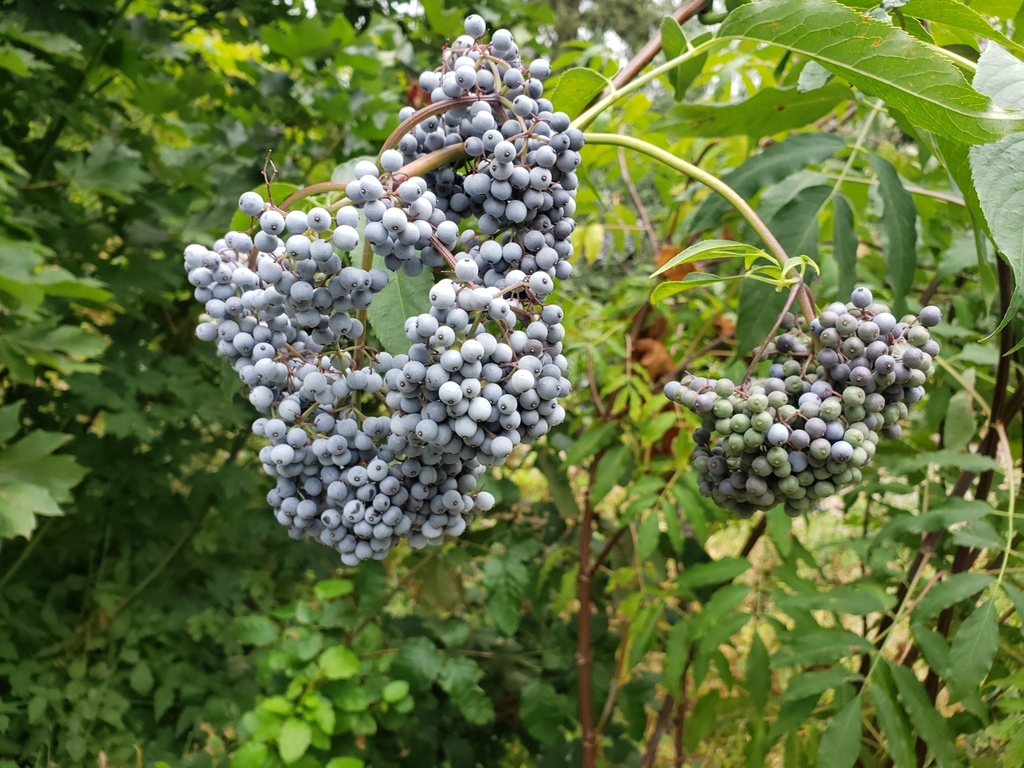
Blue elder
Sambucus cerulea Raf.
- light
- —
- water
- —
- tall
- 6.0 m
- wide
- 6.0 m
Viburnaceae
Also called Blue elderberry, Blue Elderberry
When it flowers
Not known yet in the tropics: too few flowering observations to read a season from.
Read from iNaturalist photographs of it in flower. A month counts at 50% of the best month's flowering share (smoothed over three months) and 10% of its flowering count, from at least 100 flowering observations in the band.
If a child, a pet or anyone may have eaten a plant, contact a doctor or vet straight away, or call the National Poisons Information Centre (AIIMS, New Delhi) on 1800 116 117, free and open 24 hours.
Something wrong with it?About it
- Grows as
- Shrub or treeKew's checklist, not yet checked
- Climate
- TemperateKew's checklist, not yet checked
- Wild in
- W. Canada to NW. MexicoKew's checklist, not yet checked
- Height
- 6.0 mRead from Wikipedia, one source
- Spread
- 6.0 mRead from Wikipedia, one source
- Flowers
- White, creamRead from Wikipedia, one source
Not known yet: light, water, coldest it survives, heat, hottest it survives.
In other languages (12)
- Spanish
- Saúco azul, Tilo
- German
- Blauer Holunder
- Russian
- Бузина голубая
- Swedish
- blåfläder
- Estonian
- sinine leeder
- root
- hukaat, ku'ut, pagubuxia
- Chinese (China)
- 蓝果接骨木
- Chinese
- 藍果接骨木, 绒毛接骨木, 蓝果接骨木
- Lithuanian
- mėlynuogis šeivamedis
- French
- sureau bleu
- Finnish
- siniselja
- Slovak
- baza belasá
Where this comes from
- iNaturalist, read 2026-10-26, CC0-1.0 (observation counts)
- Wikidata, read 2026-10-25, CC0-1.0
- Kew's checklist, read 2026-10-24, CC-BY-4.0
- Wikipedia, read 2026-10-25, fact, cited
- Wikimedia Commons, read 2026-10-25, CC BY 2.5
- iNaturalist, read 2026-10-26, CC BY
- iNaturalist, read 2026-10-26, CC0
- iNaturalist, read 2026-10-26, CC BY
- 3D model: Sambucus cerulea (built for Vanagrha) by Vanagrha, own
A fact “checked by a majority of its sources” was settled by a vote of the pages it was read from, not by a person reading it; one marked “one source” rests on that page alone. Anything else not marked checked has not been checked yet. Where nothing is known, the page says so rather than guess.